Round Liner Sizes Explained: What 1201RL to 1211RL Are Each For
Every round liner box says the same three things: a gauge, a count and "RL." What the box doesn't say is which one to grab for a 2-inch script piece versus a bold traditional swallow, or why your 7 looks thicker on one machine than another. This guide goes count by count, from the single up to the 18, with what each one pulls, where it earns its spot on the tray, and how to dial it in.
If you need the full rundown on shaders and mags too, start with our tattoo needle sizes guide. This post is just liners.
How do I read a round liner code like 1205RL?
Read it in three parts:
- 12 is the gauge of each pin. #12 is 0.35 mm, the standard pin most artists learned on.
- 05 is the number of pins in the grouping. Five pins, not twelve. (You'll see that mistake online more than you'd think.)
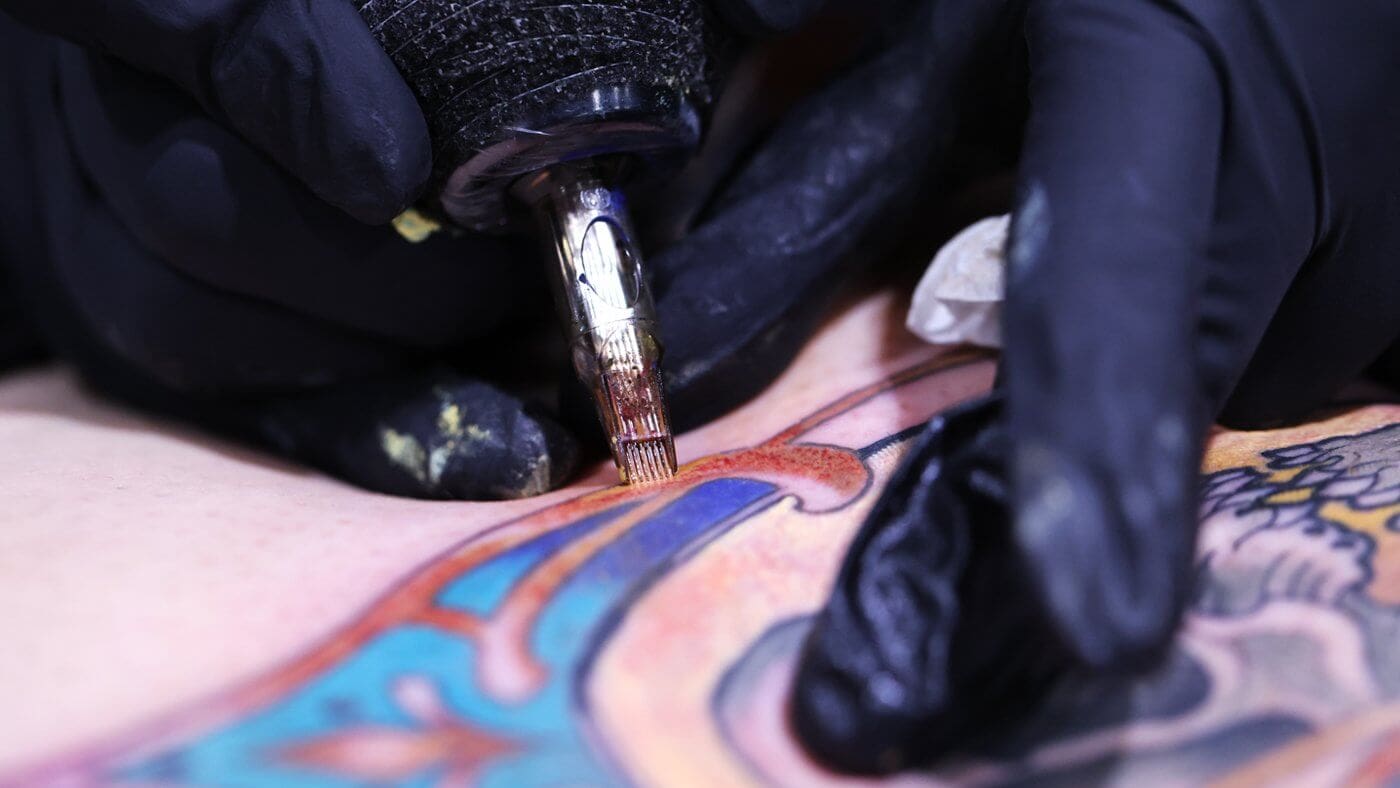
- RL is the configuration: round liner, pins soldered in a circle that tapers to a single point.
Swap the first two digits and you change the pin, not the count. A 1005RL is five #10 pins at 0.30 mm (bugpin). An 0805RL is five #8 pins at 0.25 mm. Same grouping, finer line, a little less ink per pass.
What is each round liner size used for?
Here is the whole range on one page. "XACT options" lists the gauges where we stock that count as a tight round liner cartridge, with the Classic Traditional liner and needles on bar noted where they apply.
| Code (#12) | Pins | Line it pulls | Typical work | XACT options |
|---|---|---|---|---|
| 1201RL | 1 | Single-needle hairline | Fine-line, micro script, hair strands, dotwork stippling | Tight #8, #10, #12 |
| 1203RL | 3 | Fine line | Small lettering, fine-line florals, detail inside bigger pieces | Tight #8, #10, #12; on bar #12 |
| 1205RL | 5 | Medium, all-round outline | Standard outlines, script, most realism and illustrative linework | Tight #8, #10, #12; Traditional #12; on bar #12 |
| 1207RL | 7 | Medium-bold | Bolder outlines, neo-traditional, lettering that needs to hold up | Tight #8, #10, #12; Traditional #12; on bar #12 |
| 1209RL | 9 | Bold | Traditional outlines, palm-to-hand-size flash | Tight #8, #10, #12; Traditional #12 |
| 1211RL | 11 | Heavy | Bold traditional, big outer lines on large pieces | Tight #10, #12; Traditional #12 |
| 1214RL | 14 | Very heavy | Large-scale traditional, Japanese outer lines, graphic blackwork | Tight #10, #12; Traditional #12 |
| 1218RL | 18 | Heaviest single-pass line | Back-piece and sleeve outlines, bold graphic borders | Tight #12; Traditional #12 |
One thing the table can't show: line weight does not scale with the count. A 7RL is not seven times wider than a 1RL. The pins sit in a circle, so the footprint grows with the diameter of that circle, and how deep and how slowly you run it changes the line as much as the count does.
Which liner should I use for fine line and script? (1, 3 and 5)
1RL: the single needle
The single is for hair-thin work: fine-line script, eyelashes and hair in portraits, tiny symbols, stippled dotwork. It carries the least ink of any liner, so it rewards a slower hand and more passes rather than more depth. In #8 it pulls the finest line in the XACTneedle range.
3RL: fine line with a little body
The 3 is where most fine-line and small lettering work lives. It holds a line better than a single, especially on small script that has to stay readable for years. Plenty of artists also keep a 3 on the tray for the inside detail of bigger pieces after the outline is done with a 5 or 7.
5RL: the everyday liner
The 5 is the default outline needle in a lot of shops: wide enough to lay a clean, solid line in one pass, small enough for script and illustrative detail. If you only stock one liner, this is usually it. Go to a 1005RL when you want the same grouping with a crisper, finer edge.
Which liner should I use for bold and traditional work? (7, 9, 11, 14 and 18)
7RL: bolder outlines, still controllable
The 7 is the step up when a 5 looks thin at arm's length: neo-traditional outlines, lettering on forearms and calves, and bolder illustrative work. Some artists also use it for small packed areas, though a shader or mag will do that job more cleanly.
9RL and 11RL: traditional outlines
This is the bold-will-hold range. A 9 is a common outline for hand-sized traditional flash; an 11 pulls the heavy line that makes a traditional piece read from across the room. Expect more ink per pass, so a steady, slightly slower hand matters more than extra depth.
14RL and 18RL: big lines for big pieces
Save these for large work: outer lines on back pieces, sleeves and Japanese, bold blackwork borders. They let you lay a heavy line in one pass instead of stacking passes with a smaller liner, which saves time and keeps the line even.
Tight or traditional round liner: what's the difference?
Both are round liners. The difference is how they pull the line.
- Tight round liners pack the pins close together for a crisp, controlled line. Our Classic Tight Round Liner #12 has a long 6.5 mm taper and comes in 1, 3, 5, 7, 9, 11, 14 and 18.
- Traditional round liners have a slightly softer feel. Our Classic Traditional Round Liner #12 uses a medium 3.5 mm taper and comes in 5, 7, 9, 11, 14 and 18, the counts where bold, old-school lines live.
Taper is part of that difference. A longer taper brings the pin to a finer point, which is what you want for crisp linework and fine detail. A medium taper puts more of the pin's width in play, so it carries a bit more ink into a heavier line. Neither is "better." Pick the one that matches the line you are pulling.
Should I go #12, #10 or #8 on my liners?
| Gauge | Pin diameter | Feel | XACT tight liner | Counts |
|---|---|---|---|---|
| #12 Standard | 0.35 mm | Classic line, most ink per pass | Classic #12 | 1, 3, 5, 7, 9, 11, 14, 18 |
| #10 Bugpin | 0.30 mm | Everyday liner with a tighter grouping | Precision #10 | 1, 3, 5, 7, 9, 11, 14 |
| #8 Super-Bugpin | 0.25 mm | Finest line weight, micro-detail | Xtreme Precision #8 | 1, 3, 5, 7, 9 |
All three are long taper (6.5 mm), box of 20, precision-ground Japanese steel, blister packed and EO gas sterilized.
A simple way to think about it: #8 for the finest line and extreme detail, #10 as a versatile everyday liner, #12 for a classic, bolder line with more ink per pass. Smaller pins give you a finer, crisper edge; the trade-off is less ink each pass, so fine-gauge work tends to go slower.
What voltage and hand speed should I start a liner at?
There is no single right number. Machine type, stroke length, needle count and skin all change it. So treat these as starting points, run a line on a practice skin, and adjust from there.
- Coil liners: many artists start lining somewhere around 7.5 to 9 volts and tune by ear until the machine runs smooth and consistent.
- Rotaries and pens: the right voltage depends heavily on the motor and the stroke. Start at the low end of your machine maker's recommended range and walk it up.
- Bigger groupings usually want a little more power. An 11 or 14 pushes more steel and more ink than a 3, so most artists run them a touch higher than their fine liners.
- Smaller groupings want a slower hand. A single or a 3 puts less ink in per pass. Rushing it is the classic cause of a skippy, broken line.
The machine matters too. Stroke length and give change how hard each hit lands, so the same 7 can pull a heavier line on a long-stroke or stiffer machine than on a soft, short-stroke one.
Hand speed and voltage work together. If the line looks thin or skippy, slow your hand before you crank the voltage. If it starts to look chewed up, back the voltage off and stop pushing deeper.
Are round liners on bar the same as cartridges?
Same groupings, different setup. Needles on bar mount in a tube and grip, so you set needle hang by positioning the tube in the grip instead of dialing the cartridge or grip. Plenty of traditional artists still prefer the feel. XACTonbar™ Tight Round Liner #12 Long Taper comes in 3, 5 and 7 (BAR-1203RL, BAR-1205RL, BAR-1207RL), 50 per box, in Japanese surgical-grade 304 stainless soldered to a stainless bar, and fits standard tubes and grips. For why bar needles are still on so many trays, read Tattoo Needles on Bar Never Died.
Why does my line look wrong, and which liner fixes it?
| What you see | Likely cause | Try |
|---|---|---|
| Line too thin at arm's length | Grouping too small for the size of the piece | Step up one or two counts (5 to 7, 7 to 9) |
| Small script closes up over time | Grouping too big for the letter size, or running too deep | Drop to a 3, or same count in #10 or #8 |
| Skippy or broken line | Hand moving too fast for the grouping | Slow down before raising voltage; check your stretch and hand support |
| Edge not crisp enough | Pin or taper too heavy for the style | Tight liner, long taper, or a finer gauge |
| Heavy line needs several passes | Grouping too small for bold work | Go to an 11, 14 or 18, or try the Traditional RL |
Round liner FAQ
What is a 1205RL tattoo needle used for?
A 1205RL is five #12 (0.35 mm) pins in a round liner. It's the everyday outline needle: clean, solid lines for most outlines, script and illustrative work.
What is the difference between a 1203RL and a 1209RL?
Same pin and configuration, different count. The 3 pulls a fine line for small lettering and detail; the 9 pulls a bold line for traditional outlines.
What is a 1207RL used for?
Bolder outlines than a 5, such as neo-traditional, bigger lettering and illustrative pieces that need a stronger line.
What is a 1201RL used for?
Single-needle fine-line work: micro script, hair strands, tiny symbols and stippled dotwork.
Is a 1211RL good for traditional?
Yes. An 11 is a common choice for bold traditional outlines, especially on hand-size pieces and larger.
Not sure which configuration fits your style? Try the XACTneedle Finder. Running a studio? Ask us about a studio account, or catch the XACT van when it's on your route.