Arnica for Tattoo Aftercare: What Actually Works

Table of Contents
- What Is Arnica Montana?
- Tattoo Healing Stages and Why Arnica for Tattoo Aftercare Helps
- Why Standard Aftercare Isn't Enough
- How Arnica Actually Works
- Topical vs. Oral: What You Need to Know
- What Actually Works for Arnica for Tattoo Aftercare
- How to Use Arnica for Tattoo Aftercare
- What You Can't Say About Arnica
- Why Arnica Works for Tattoo Aftercare
- The Non-Negotiable Basics
- The Bottom Line on Arnica for Tattoo Aftercare
- FAQs
Getting tattooed is controlled trauma. Your artist just pierced your skin thousands of times, and now the real work begins. Most aftercare advice is stuck in the petroleum jelly stone age, but professionals know better. They're turning to arnica for tattoo aftercare because this alpine flower does what heavy ointments can't: reduce swelling and bruising without suffocating your fresh ink. Here's what actually works, backed by centuries of traditional use and modern research.
What Is Arnica Montana?
Arnica montana grows in the mountains of Europe at elevations above 3,000 meters. Harsh conditions produce potent compounds. For 500+ years, herbalists have used it for bruising, inflammation, and tissue damage.
Tattoo Healing Stages and Why Arnica for Tattoo Aftercare Helps
Understanding the healing timeline shows why arnica for tattoo aftercare makes sense:
Days 1-3: Acute Inflammation Red, hot, swollen skin as blood vessels dilate and white blood cells rush to the wound. Plasma, ink, and lymphatic fluid ooze from the tattoo. Your immune system treats tattoo ink as foreign material, launching a response to remove it.
Days 3-14: Scabbing Phase New skin cells rapidly divide to close the wound. Protective scabs form. Intense itching as nerve endings regenerate. The tattoo looks cloudy as dry skin builds up over the ink.
Weeks 2-4: Peeling and Remodeling Scabs flake away revealing new skin. Tattoo may appear temporarily faded. Collagen reorganizes in the dermis. Remaining redness resolves.
Months 1-6: Deep Healing Surface appears healed after 2-3 weeks, but deeper layers continue repairing for six months. Ink particles become permanently trapped in dermal cells.
Why Standard Aftercare Isn't Enough
Your body sees fresh ink as an invasion. White blood cells rush to the site, blood vessels dilate, fluid accumulates. Inflammation is necessary for healing, but too much causes problems: excessive scarring, prolonged discomfort, ink migration. The "keep it clean and moisturized" advice doesn't address inflammation. Petroleum products trap bacteria and block oxygen. Heavy ointments can oversaturate. NSAIDs thin blood and mess with prostaglandins your body needs for proper healing. This is where arnica for tattoo aftercare changes the game.
How Arnica Actually Works
Arnica hits inflammation from multiple angles. It inhibits NF-κB, which controls pro-inflammatory signals like TNF-alpha and interleukin-1. This reduces swelling without killing the healing response. Clinical studies show it decreases bruising after procedures. A 2016 review concluded it could replace NSAIDs for post-surgical pain in certain scenarios. Traditional use as an immune stimulant may speed healing by helping your body clear damaged tissue more efficiently. The mechanism is different from conventional pain relievers, which is why many artists and clients prefer it.
Topical vs. Oral: What You Need to Know
Topical Arnica Gels and creams contain measurable arnica extract. You apply directly to skin for localized effects. Quick absorption, no greasy residue.
Oral Homeopathic Arnica Highly diluted preparations taken under the tongue. Traditional homeopathy operates on different principles than conventional medicine, but millions use it safely. The extreme dilution means negligible amounts of raw arnica, which is toxic in concentrated form.
What Actually Works for Arnica for Tattoo Aftercare
Boiron Arnicare The most recognized name in arnica. Founded in 1932, recommended by surgeons and dermatologists worldwide.
Arnicare Gel: 7% arnica montana. Non-greasy, fragrance-free, cools on contact. For intact skin only.
Arnicare Bruise Gel: Same strength, formulated specifically for discoloration and swelling. Apply as soon as you unwrap.
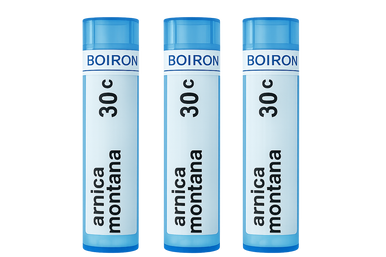
Arnica Montana 30C Pellets: Oral form. Dissolves under tongue, three times daily. Combines with topical for full-body support.
Boiron Arnica Montana 30C Homeopathic Medicine (3-Pack)
$16.99
Arnica Montana 30C – 80 Pellets (3-Pack / 240 Pellets Total) Arnica Montana 30C is a classic homeopathic preparation traditionally used by homeopathic practitioners to… read more
Traulevium Products Following the formulation principles from 1936, Traulevium delivers the same 14-ingredient complex that made the original famous. Made in USA, quality-controlled, no compromises.
Traulevium Oral Drops (59ml): The full 14-botanical formula with Arnica montana as lead ingredient, plus Calendula, Hamamelis, Echinacea, Chamomilla, Symphytum, and more. 10 drops three times daily under tongue or in water. Multi-pathway support means hitting inflammation from every angle.
Traulevium Joint & Muscle Gel (1.69 oz tube): European arnica sourced from actual mountains, combined with devil's claw in an Italian-made base. Non-greasy, absorbs fast, zero medicinal smell. Paraben-free, doesn't stain. This is what you want on fresh ink—effective without the petroleum suffocation. Roll-on version available for easy application during long sessions.
These products carry standard disclaimers: "Claims based on traditional homeopathic practice, not accepted medical evidence. Not FDA evaluated."
How to Use Arnica for Tattoo Aftercare
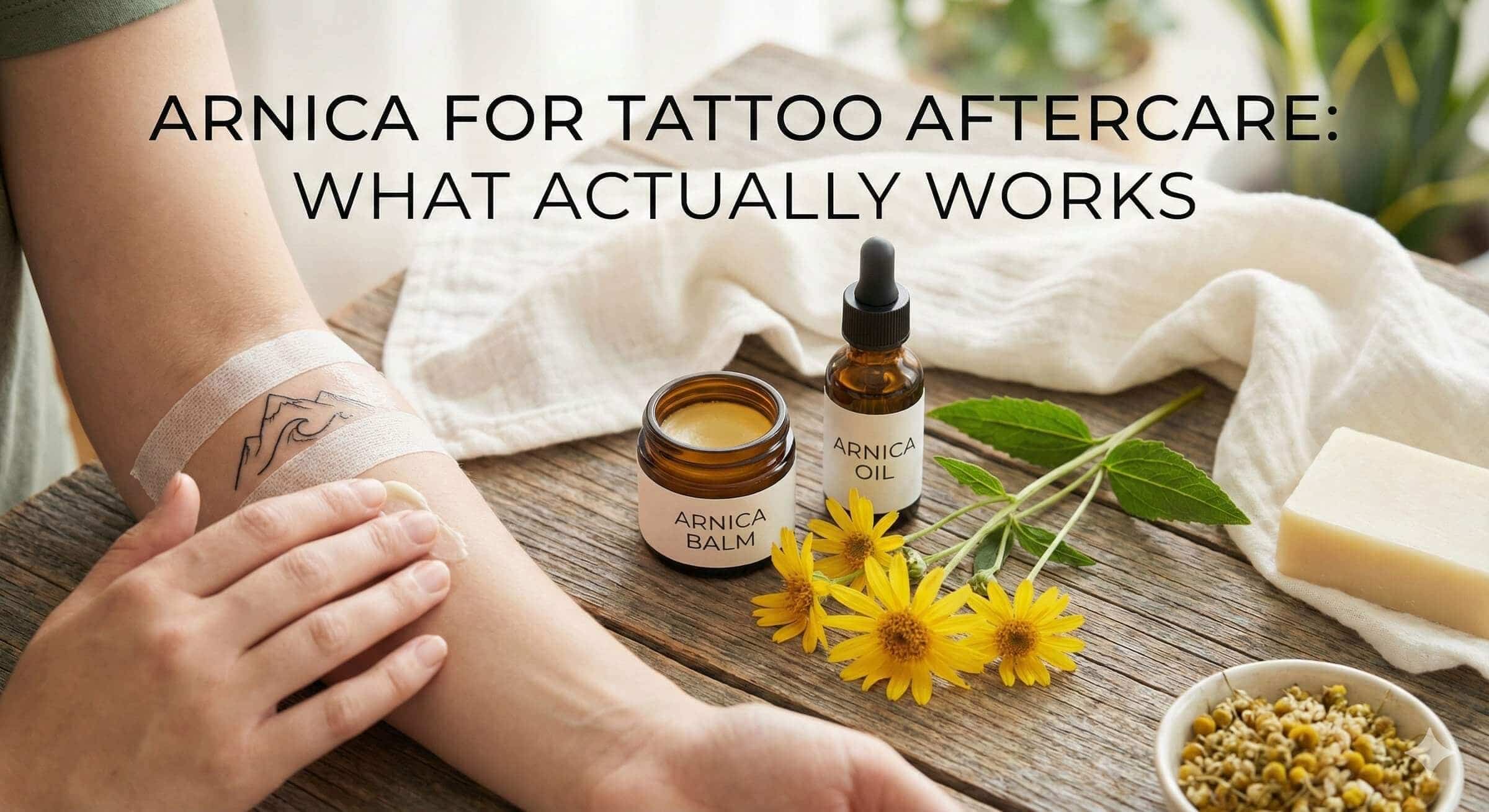
Topical Application Start as soon as you unwrap (2-24 hours post-session). Wash with gentle soap and lukewarm water. Pat dry. Apply thin layer of Arnicare Gel, Arnicare Bruise Gel, or Traulevium Joint & Muscle Gel. Circular movements until absorbed. Don't apply to broken skin or open wounds. 2-3 times daily for the first two weeks. If you're icing, wait 5 minutes before applying arnica.
Oral Support Arnica 30C pellets or Traulevium Oral Drops: Start the evening you get tattooed. 3-5 pellets or 10 drops under tongue, three times daily. No eating or drinking 15 minutes before or after. Continue for 5-7 days until the acute inflammation phase passes.
Combination Protocol Most serious artists and clients run both. Traulevium Gel hits local inflammation, swelling, and discoloration. Oral drops work systemically through the full botanical complex. No interactions, no conflicts. The European arnica in Traulevium Gel absorbs clean without that medicinal stink, which matters when you're healing ink on visible skin.
What You Can't Say About Arnica
Here's the legal reality: you can't make medical claims about homeopathic products. You can't say arnica "treats" infection, "cures" inflammation, "prevents" scarring, or "heals" wounds. You can discuss traditional use, published research, how it works mechanically. You can mention that surgeons and dermatologists recommend it. But you can't position it as medicine without FDA approval. Keep disclaimers visible, avoid drug claims, and you're clear.
Why Arnica Works for Tattoo Aftercare
Artists and clients see results. Plastic surgeons recommend it before and after procedures. Dermatologists stock it. A 2016 study found it effective for post-surgical pain, concluding it could replace NSAIDs in certain scenarios. Research shows it reduces bruising after facial procedures. The anti-inflammatory compounds are well-documented. Millions use it annually because it delivers. Topical arnica absorbs where you need it. Oral forms provide systemic support. The track record speaks for itself—500 years of traditional use, modern clinical validation, and real-world results in tattoo shops worldwide.
The Non-Negotiable Basics
Arnica for tattoo aftercare isn't magic. It works alongside proper fundamentals:
Clean it (gentle soap, lukewarm water, 2-3x daily). Moisturize smart (fragrance-free, non-comedogenic, don't oversaturate). Protect from sun (UV destroys fresh ink and slows healing). No soaking (showers fine, no baths/pools/hot tubs for 2-3 weeks). Don't touch it (picking scabs = scarring and ink loss). Hydrate internally (water, protein, vitamins C and E, zinc). Skip booze and cigarettes during acute healing (both slow tissue repair).
Arnica supports this foundation. It moderates inflammation and improves comfort while your body does the real work.
The Bottom Line on Arnica for Tattoo Aftercare
Arnica montana has 500 years of traditional use for bruising, inflammation, and tissue damage. Research shows anti-inflammatory effects through multiple pathways. For tattoo aftercare, it offers a natural option that doesn't suffocate ink under petroleum or thin blood like NSAIDs. Products like Boiron Arnicare and Traulevium provide standardized, quality-controlled preparations artists and clients trust.
Use arnica for tattoo aftercare as part of solid fundamentals, not instead of them. When talking about these products publicly, remember the legal boundaries around medical claims. Include disclaimers. With that handled, this alpine remedy keeps doing what it's done for centuries: supporting the body's natural healing response when skin gets damaged.
Important Disclaimers:
Information for educational purposes only. Not medical advice.
These statements have not been evaluated by the Food and Drug Administration. These products are not intended to diagnose, treat, cure, or prevent any disease.
All claims regarding homeopathic arnica are based solely on traditional homeopathic principles and practice. These claims are not accepted as medical evidence by the FDA or mainstream medical community. There is no scientific evidence that homeopathic products work beyond placebo effect.
The homeopathic indications for use are based on traditional homeopathic materia medica and reference texts, not on modern scientific research or clinical trials meeting current FDA standards for efficacy.
Consult your healthcare provider before using any homeopathic products if pregnant, nursing, taking medications, or have medical conditions. Seek immediate medical attention for signs of infection (increased pain, spreading redness, fever, pus, red streaks).
Always follow your tattoo artist's specific aftercare instructions. Individual results may vary. This content does not create a doctor-patient or practitioner-client relationship.
FAQs
When should I start using arnica on my new tattoo?
Start as soon as you remove the initial bandage, typically 2-24 hours after your session. Apply topical arnica gel 2-3 times daily for the first two weeks. If using oral drops or pellets, begin the evening you get tattooed and continue for 5-7 days.
Can I use arnica with other tattoo aftercare products?
Yes. Arnica works alongside standard aftercare. Apply arnica gel after cleaning and before moisturizing. Oral arnica has no known interactions with topical products. Don't apply arnica to broken skin or open wounds—wait until the skin barrier closes.
What's the difference between arnica gel and arnica pellets?
Arnica gel is applied directly to the tattooed area for localized inflammation and bruising. Arnica pellets dissolve under the tongue for systemic support throughout your body. Many artists and clients use both together for maximum effect.
Is arnica safe to use on fresh tattoos?
Yes, when applied to intact skin. Don't use on broken, damaged, or bleeding areas. Arnica has been used safely for centuries. Topical preparations are designed for external use. Oral homeopathic forms are highly diluted and well-tolerated. Allergic reactions are rare but possible—discontinue if irritation occurs.
How long does it take for arnica to reduce tattoo swelling?
Most people notice reduced swelling and discomfort within 24-48 hours of starting arnica. The acute inflammation phase lasts 3-7 days. Continue using arnica throughout this period for best results. Individual response varies based on tattoo size, placement, and personal healing factors.
Where can I buy quality arnica for tattoo aftercare?
Look for established brands like Boiron Arnicare (available at most pharmacies and health stores) or Traulevium products (available through body art suppliers and specialty retailers). Choose products specifically formulated for topical use on skin or oral homeopathic use. Avoid products with added fragrances or heavy petroleum bases.
Does arnica help with tattoo color retention?
Arnica doesn't directly affect ink retention, but by reducing excessive inflammation and supporting proper healing, it helps create optimal conditions for your tattoo to heal clearly and vibrantly. Excessive swelling and inflammation can contribute to ink loss and blurring.