Cheap Needles, Shitty Results: The Tattoo Needle Cost Artists Always Ignore

Table of Contents
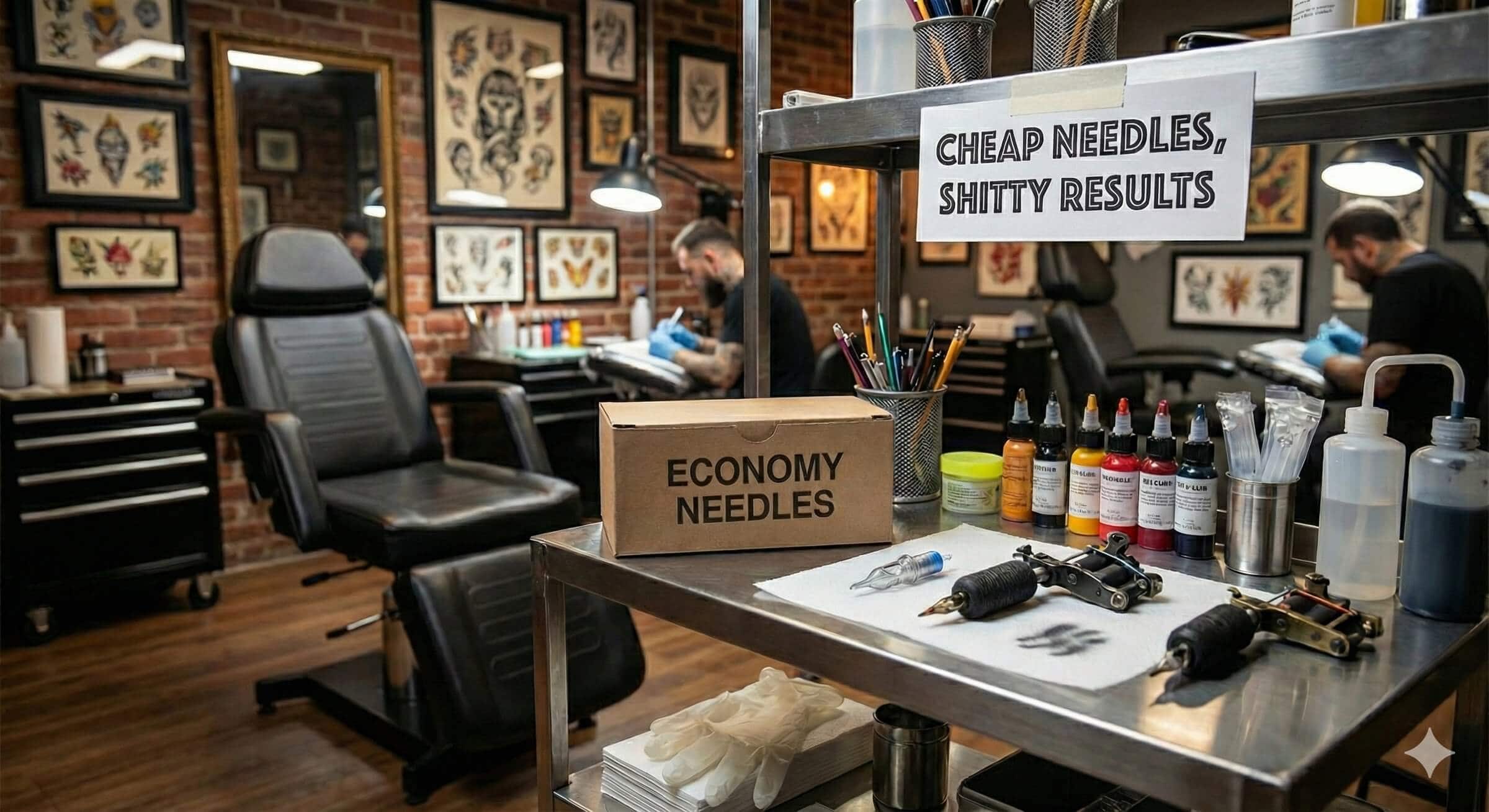
Every artist wants to save money on supplies, especially tattoo needle cost —until those “savings” start wrecking your workflow, chewing up your client’s skin, and bleeding profit right out of your schedule. Cheap tattoo needles look harmless sitting in a $15 box, but the second you put them in a machine, they become the most expensive mistake in your studio.
I manufacture professional tattoo needles and medical devices for a living. I know exactly where factories cut corners to hit bargain-bin pricing. And I know exactly how those shortcuts hit you—in time lost, sessions dragged out, healing issues, touch-ups, and client experience.
If you think you’re “smart budgeting” by buying cheap cartridges, you’re not cutting costs.
You’re setting money on fire.
Let’s break down the real tattoo needle cost—the part nobody talks about, but every artist pays for.
The Sticker Price Illusion
Here’s the simple comparison most artists use:
• Cheap cartridges: $15.00 per 20-pack → $0.75 each
• Premium cartridges (like XACT): $26.99 per 20-pack → $1.35 each
Difference: $0.60 per cartridge.
This is where artists misjudge tattoo needle cost—they look at the box price instead of the cost inside the tattoo session. That sixty cents isn’t “brand markup.” It pays for better steel, cleaner tapers, real coating, reliable soldering, and validated sterilization.
Cut those corners and the session becomes a fight.
(If you want to understand the problem of needle quality on a bigger scale, read our post on tattoo needle quality and safety)
How Cheap Tattoo Needles Actually Cut Costs
Factories don’t make $15 boxes through magic. They get there through subtraction.
1. Steel Quality
Premium cartridges use hardened Japanese 304 stainless steel. This alloy allows:
• Longer, sharper, cleaner tapers
• Better edge retention
• Far less microscopic curling or “hooking”
Cheap needles use inconsistent generic steel that dulls fast.
2. Taper Grinding
Grinding a clean taper takes time and precision.
Cheap brands run dull grinding wheels fast. Result:
• Micro-burrs
• Rough penetration
• Drag and inconsistent lines
3. Soldering
When the solder bead is off-center, the needle wobbles inside the housing.
Symptoms:
• Shaky lines
• Blotchy saturation
• Ink splatter
4. Membrane Quality
Budget membranes are either too stiff (straining your machine) or too loose (dangerous backflow).
If you want a deeper look at choosing needle types, see our tattoo needle configuration guide.
The Hidden Tax on Your Hourly Rate
Your most expensive studio resource isn’t ink, cartridges, or machines—it’s your time.
If you charge $150/hour, every minute is worth $2.50.
Now imagine this:
Cheap needle dulls → drag starts → lines break up → you stop to replace it → you rework the area you struggled with → you regain your flow.
That’s 10 minutes gone.
10 minutes × $2.50 = $25 lost.
You tried to save $0.60 on a needle and lost $25 in productivity.
You just erased the savings from two full boxes of cheap cartridges.
This is where tattoo needle cost becomes painfully real.
Case Study: Alex vs. Jordan (Numbers Don’t Lie)
Alex
Buys cheap needles ($0.75 each).
Uses 200 boxes/year → $3,000 annual needle cost.
Quality issues:
• Throws away 1 in 10
• Loses 5 minutes per tattoo fighting poor flow
1,000 tattoos × 5 minutes = 5,000 minutes = 83 hours lost
83 hours × $150/hr = $12,450 gone
Jordan
Buys XACT premium needles ($1.35 each).
Uses 200 boxes/year → $5,400 annual needle cost.
But she doesn’t lose 83 hours of billable time. She keeps her workflow clean.
Result:
Jordan “spends more on needles” but keeps roughly $10,000 more profit.
Cheap is expensive.
Skin Trauma: The Part Clients Feel
Cheap needles don’t only mess with your workflow—they mess with your clients.
Cheap steel + cheap grinding =
• More passes
• More drag
• More trauma
• More scabbing
• More fallout
A touch-up costs you another hour you can’t bill.
That’s $150 out the door because you tried to stretch a $0.75 cartridge.
Clients don’t know metallurgy, but they absolutely know if their tattoo hurt more, healed worse, or needed a redo.
This is why tattoo needle cost per session matters far more than cost per box.
The Real Cost Per Tattoo
Most medium tattoos use 3–5 cartridges.
Premium: 5 × $1.35 = $6.75
Budget: 5 × $0.75 = $3.75
Difference: $3.00
Three dollars.
That’s the price of smooth saturation, consistent lines, clean healing, and efficient workflow.
If you want more content like this, check out our tattoo industry insights.
Quick Facts: Tattoo Needle Cost vs. Quality
| Factor | Cheap Tattoo Needles | Premium Tattoo Needles |
|---|---|---|
| Cost Per Needle | ~$0.75 | ~$1.35 |
| Steel Quality | Generic variable steel | Japanese 304 stainless steel |
| Sharpness Retention | Dulls quickly | Holds point session-long |
| Ink Flow | Inconsistent | Smooth and predictable |
| Solder Alignment | Often off-center | Precision-centered |
| Membrane Quality | Stiff or loose | Medical-grade |
| Skin Trauma | Higher | Lower |
| Healing Outcome | Slower, more fallout | Faster, predictable |
| True Cost Impact | Lost time, touch-ups | Higher profit per hour |
Final Word
When you run a professional tattoo studio, you don’t choose tools based on what’s cheapest in your cart—you choose tools that make you faster, cleaner, and more consistent.
Premium cartridges cost more at checkout and less everywhere else.
If you're ready to upgrade your setup, you can see our full line of premium tattoo needles here.
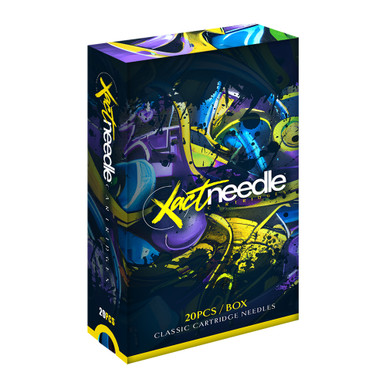
Tight Round Liner, #12 Standard
$26.99
XACTneedle Cartridge – Classic Tight Round Liner #12 Backed by over 25 years of medical-device manufacturing expertise, the XACTneedle Classic Tight Round Liner #12 is… read more
FAQs
What affects tattoo needle cost the most?
Steel quality, taper grinding, solder alignment, membrane consistency, and sterilization validation.
Do expensive tattoo needles actually perform better?
Yes. You see it in the first line you pull.
How many cartridges does a typical tattoo require?
Small: 1–2
Medium: 3–5
Large: 5–10+
Does needle quality affect healing?
Absolutely. Sharp, consistent needles create less trauma and heal cleaner.