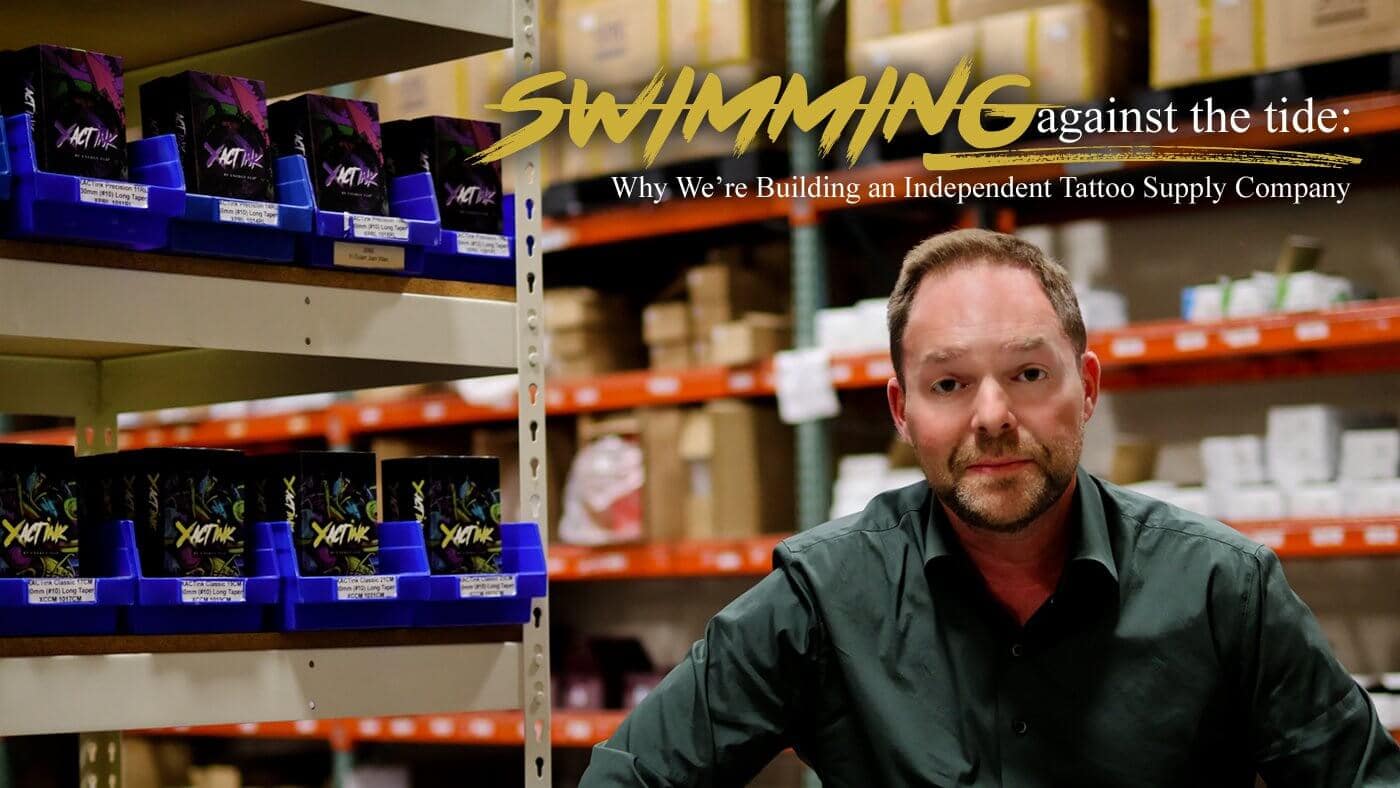
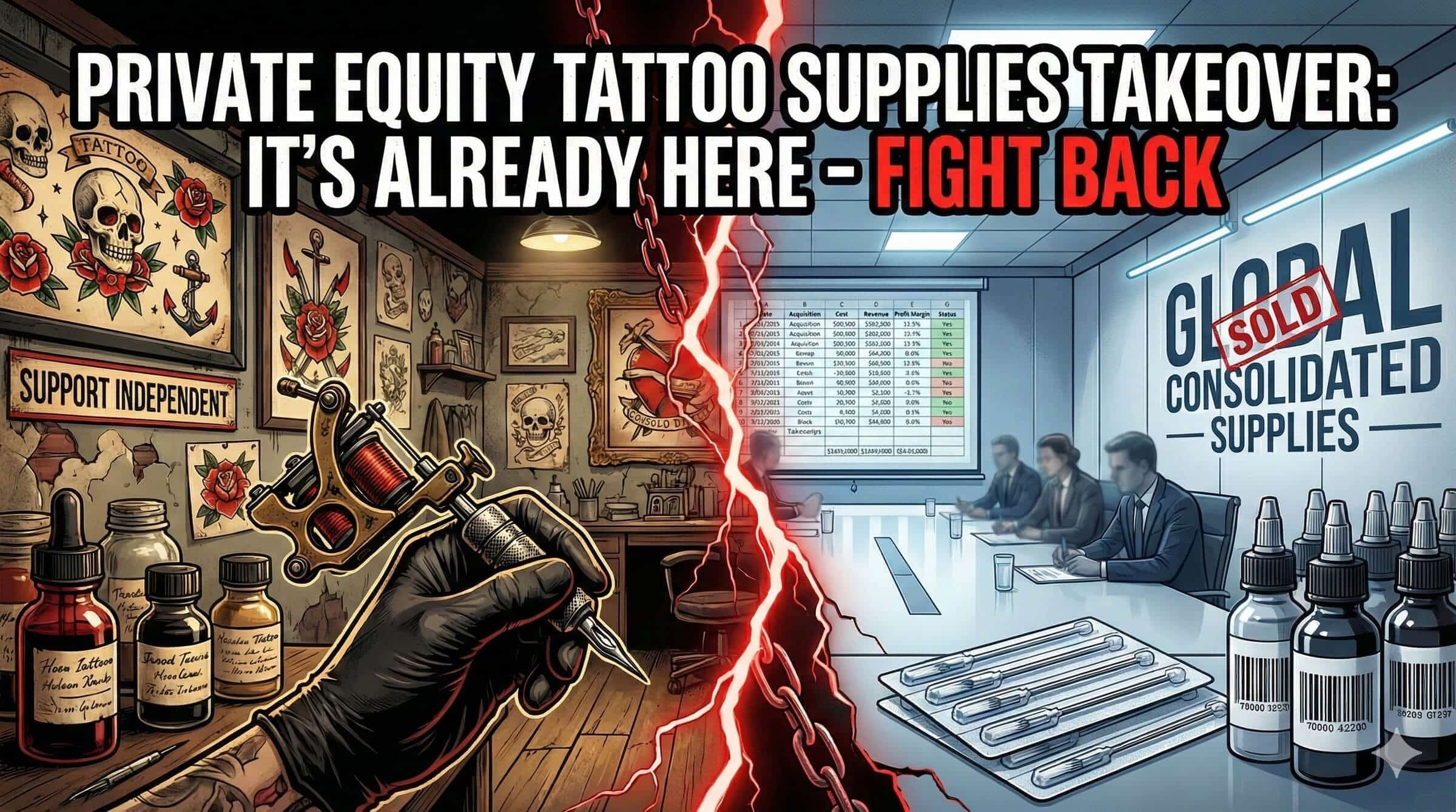
Private Equity Tattoo Supplies Takeover: It's Already Here - Here's How to Fight Back

Table of Contents
- The Private Equity Playbook in 60 Seconds
- Why Tattoo Supplies Are Perfect Targets
- What This Means for Your Shop
- The Tattoo Supply Red Flags Are Already Here
- What Actually Happens to Quality When PE Takes Over
- The Artists Who'll Get Hit Hardest
- What You Can Do Right Now
- Why We're Not Selling Out
- The Timeline is Shorter Than You Think
- The Question That Matters
- FAQs
Remember when Toys R Us had 33,000 employees and stores full of everything a kid could dream of? Then Wall Street firms bought it, loaded it with $5 billion in debt, and within 12 years it was liquidated. Not because kids stopped wanting toys - because private equity needed their cut.
Same story with Payless, Sports Authority, Gymboree, and dozens more. Over 50 private equity-backed retail bankruptcies between 2015-2020. Half a million jobs gone.
Here's the thing nobody's telling you: the same private equity tattoo supplies consolidation playbook has been running for almost a decade. You just didn't notice.
The Private Equity Playbook in 60 Seconds
Here's how the scam works:
- Buy one decent-sized company in your target industry (the "platform")
- Use that company's credit to acquire 10, 20, 50 competitors
- Load everything with debt to pay yourself massive dividends and "management fees"
- Cut costs ruthlessly - cheaper materials, fewer staff, reduced service
- Raise prices because you've eliminated the competition
- Sell to the next sucker and walk away before it collapses
Over 70% of private equity deals are these "add-on acquisitions" that consolidate industries. Most fly under the radar because they're below the $119 million threshold that would trigger antitrust review.
Why Tattoo Supplies Are Perfect Targets
Private equity tattoo supplies firms look at what makes an industry attractive:
- Fragmented market (thousands of independent shops, no dominant chains)
- High margins (average tattoo shop runs 55% profit margin)
- Steady demand (recession-resistant, loyal customers)
- Emotional attachment (artists need quality supplies and will pay)
- Easy pickings (small suppliers acquired cheaply)
That's textbook PE territory. And the consolidation is already happening.
Major supply consolidators are actively acquiring brands and shopping themselves for valuations approaching $1 billion. When a consolidator starts looking for a buyer, that's not a manufacturer trying to grow - that's private equity setting up an exit after rolling up the industry.
What This Means for Your Shop
Once private equity tattoo supplies consolidators control the market, here's your new reality:
Prices Double or Triple
Competition eliminated? Prices go up. Check vet bills if you don't believe me - up 60% in a decade. Your needles, ink, machines - everything costs way more because where else are you going?
Quality Drops
PE firms optimize for 3-6 year hold periods, not long-term quality. Cheaper overseas manufacturing replaces medical-grade standards. Reduced quality control. Longer lead times. They'll ship commodity garbage and charge premium prices.
Customer Service Dies
The supplier who knows your name and answers your calls? Gone. You'll get outsourced call centers reading scripts. Try getting someone who actually understands tattoo supplies when your order is wrong.
Innovation Stops
R&D doesn't generate immediate returns. New products dry up. You get the same commodity products year after year while they extract maximum profit.
You Become a Captive Customer
Once they control enough of the supply chain, you have nowhere else to go. They can dictate terms. Exclusive arrangements. Take-it-or-leave-it pricing. No negotiation.
The Tattoo Supply Red Flags Are Already Here
This isn't speculation. Here's what's already happened while you weren't paying attention:
The Big Roll-Up Move (2021)
One major consolidator announced they'd rolled up over a dozen well-known brands under a single corporate umbrella. Premium wireless tattoo machines. Industry-standard inks used in shops worldwide. High-end body jewelry manufacturers. PMU pigment brands trusted by permanent makeup artists. Needle and tube suppliers. Aftercare product lines.
Brands you've been buying from for years, now all owned by the same company. They kept the original brand names so you wouldn't notice. Classic PE playbook.
By 2023, that same consolidator was shopping itself to buyers for nearly $1 billion. Expected to generate $70 million in EBITDA on $250 million in revenue. That's not a manufacturer growing organically. That's private equity setting up an exit after consolidating the market.
The Private Equity Platform Play (2015)
Another consolidator backed by Bunker Hill Capital systematically acquired major tattoo supply companies starting in 2015. First they bought one of the leading tattoo furniture and equipment manufacturers - the company making those high-end tattoo chairs and workstations you see in every shop. Then in 2016 they acquired one of the biggest distributors in the US - a major supplier of needles, tubes, inks, machines, medical supplies, and body piercing accessories that's been around since the 90s.
The PE firm openly described this as creating "the largest manufacturer and distributor of tattoo supplies in North America." That's not even subtle. They told you exactly what they were doing.
The Corporate Structure Shell Game
Both consolidators use the same playbook: create a "family of brands" corporate structure. Each brand operates under its original name. The websites stay the same. The packaging looks the same. The catalogs still show up with the familiar logos. But behind the scenes, it's all one company answering to the same investors.
You think you're supporting different suppliers by diversifying your orders. You might order your machines from one brand, your inks from another, your needles from a third. You're actually buying from the same corporate entity that's consolidated the market.
The Valuation Insanity
When a tattoo supply company is being shopped for $1 billion on $250 million in revenue, that's a 4x revenue multiple. Those are VC/PE valuations, not manufacturing business valuations. Someone's expecting massive growth and margin expansion.
Where do you think those margins come from? Higher prices and lower costs. Which means you pay more for cheaper products.
The veterinary industry went from under 10% corporate ownership to 30-50% in one decade. The tattoo supply consolidation has been running for almost that long, and most artists have no idea it's happening.
What Actually Happens to Quality When PE Takes Over
Let me get specific about what consolidation means for your supplies.
Right now, companies like us work with FDA-regulated acupuncture needles held to medical device standards, then apply those same standards to tattoo and piercing supplies. Our family maintains in-house quality control because our reputation is on the line.
When private equity takes over, here's what changes:
Manufacturing Standards Get "Optimized"
Manufacturing is expensive. Quality control is expensive. Why bother when you can just import commodity needles from the cheapest overseas factory? Consolidators will kill medical-grade manufacturing in favor of bulk purchasing from whoever's cheapest this quarter.
Supply Chain Gets "Streamlined"
Multiple suppliers mean redundancy and safety. Consolidated companies run lean, centralized supply chains optimized for profit. Great until something breaks. Then you're waiting weeks for restocks because there's no backup.
Product Development Gets Cut
Why invest in better needles or improved machines when you've already eliminated the competition? PE firms don't build for the future - they extract value for the 3-6 year hold period, then sell.
Our independence allows us to make the best tattoo needles on the market.
Round Shader, #10 Bugpin
$26.99
XACTneedle™ Cartridge – Precision Round Shader #10 Smooth blends. Even fills. Precision shading made effortless. The #10 Precision Round Shader is engineered for artists who… read more
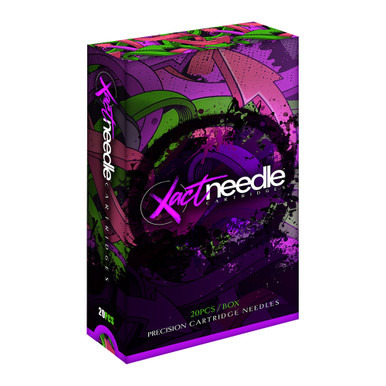
We can spend years perfecting needle geometry and tip configurations because we're not answering to investors demanding quarterly returns. You obsess over every detail because your name is on the box, not because a spreadsheet says it's profitable this quarter.
Artist Feedback Gets Ignored
Small independent suppliers listen to artists, show up at conventions, make products based on your needs. PE-backed megacorps optimize for their investors' quarterly returns, not your feedback.
The Artists Who'll Get Hit Hardest
PE consolidation doesn't affect everyone equally. Here's who gets screwed:
New Artists Starting Out
When prices double and quality drops, new artists trying to build a kit on a budget are forced to choose between overpriced consolidated brands or sketchy unregulated imports. The middle ground - quality independents at fair prices - disappears.
Small Independent Shops
You don't have the buying power to negotiate with consolidated suppliers. You pay full retail while corporate chains get volume discounts. Your cost disadvantage grows every year.
Artists Who Care About Safety
Once consolidators control the supply chain, medical-grade standards become optional. You'll be choosing between expensive corporate garbage and cheap overseas garbage. The suppliers who actually maintain FDA-level quality get acquired or priced out.
Custom and Specialty Work
Consolidated companies serve the mass market. Specialty supplies, unique products, custom solutions - all gone. You get what the spreadsheet says is most profitable, nothing more.
What You Can Do Right Now
Support Independents While They Exist
Every dollar you spend with PE-backed consolidators funds the next acquisition. Shop with family-owned manufacturers and independent suppliers while you still can.
Build Multiple Supply Relationships
Don't become dependent on one source. Consolidated companies love customer lock-in. Maintain relationships with several independent suppliers.
Verify Manufacturing Standards
Ask where products are manufactured. Ask about quality control. Ask if they maintain FDA-level standards even for non-regulated products. Most consolidated suppliers won't have good answers.
Talk About This in Your Community
The tattoo world is tight-knit. When artists start asking questions about ownership and consolidation, suppliers feel the pressure. Make it socially unacceptable to sell out to private equity.
Look for the Signs
Be suspicious when suppliers rebrand, get "acquired" by larger companies, or suddenly have a "family of brands." That's often the beginning of a PE roll-up.
Why We're Not Selling Out
We've been approached. Multiple times. Private equity firms and consolidators see what we've built over 25 years - FDA-registered facility, medical-grade standards, established customer relationships - and they want to buy it.
We keep saying no.
My father Gary founded this company in 2000. We work in-house because we care about quality. We apply medical device standards to tattoo supplies because we believe artists deserve the same safety as healthcare providers. We maintain multiple product lines (acupuncture, tattoo, piercing, PMU) because diversification keeps us stable.
We're not trying to build a company to flip to Wall Street. We're trying to build a sustainable business that'll be here serving artists 25 years from now.
But we can't fight the tide alone. If tattoo artists keep buying from PE-backed consolidators because they're convenient or cheap right now, there won't be independents left in five years.
The Timeline is Shorter Than You Think
Toys R Us: bought by PE in 2005, bankrupt by 2017, liquidated by 2018.
Payless: bought by PE in 2012, bankrupt by 2017, liquidated by 2019.
Veterinary clinics: consolidation started in 2010, hit 30-50% corporate ownership by 2020.
The pattern plays out fast once it starts. And in the tattoo supply industry, it's already started.
Major consolidators are already operating. They're already acquiring brands. They're already shopping for buyers. The private equity firms are already circling.
You have maybe 3-5 years before consolidation reaches the point where independent suppliers can't compete. After that, you're stuck with whatever the PE-backed megacorps decide to sell you at whatever price they decide to charge.
The Question That Matters
Ten years from now, where are you buying your supplies?
From independent manufacturers who know your name and care about quality? Or from a PE-backed consolidator that sees you as a revenue extraction opportunity?
From companies that maintain medical-grade standards because it's the right thing to do? Or from whoever's importing the cheapest commodity products this quarter?
From suppliers who listen to artist feedback and innovate? Or from corporations optimizing for their investors' quarterly returns?
The veterinarians didn't get a choice - by the time they noticed, consolidation was done. The dentists are figuring it out now, but it's too late to stop. The retail workers at Toys R Us, Payless, and Sports Authority didn't see it coming until they got laid off.
You're being given a warning they never got.
The consolidation is already happening. The private equity playbook is already running. The question is whether you'll fight back while you still can, or whether you'll watch the tattoo supply industry get looted like every other industry before it.
Support independents. Ask questions. Demand transparency. Build relationships with suppliers who'll still be here in ten years.
Because if you don't, they won't be.
About XACTbodyart / Acu-Market: Family-owned since 2000. Medical-grade standards applied to tattoo supplies, piercing supplies, and PMU supplies. We're not looking to flip to private equity - we're looking to serve artists for the next 25 years like we've served them for the past 25.
Not sold. Not selling. Not interested.
FAQs
Why don't you name the specific companies that have been consolidated?
We're not interested in "outing" anyone or creating drama in the tattoo community. Our goal isn't to shame specific brands - it's to educate artists about what's happening so you can make informed decisions. The information about which brands were rolled up is publicly available if you want to research it yourself. Look at press releases from 2021, check LinkedIn company profiles, and see who lists the same parent company. We want you to ask questions and do your own homework, not just take our word for it. Independent research makes you a smarter buyer.
How can I tell if my supplier has been acquired by a consolidator?
Ask them directly. Call your supplier and ask: "Are you independently owned or part of a larger corporate group?" If they dodge the question, won't give you a straight answer, or hide behind vague language about "partnerships" and "family of brands," that's a red flag. Legitimate independent companies will proudly tell you they're independent. Also check their website's "About Us" section - many consolidators use phrases like "part of [Corporate Name]" or list multiple brands under one umbrella.
What's the difference between private equity and a regular business acquisition?
When a regular company acquires another business, they typically buy it with cash and integrate it into their operations for long-term growth. Private equity firms use leveraged buyouts - they borrow money to buy companies, make the acquired company responsible for paying back the debt, extract fees and dividends, then sell within 3-6 years. The goal isn't building a sustainable business, it's extracting maximum value in the shortest time possible. That's why PE-backed companies often see quality decline, prices increase, and services cut.
Are all corporate consolidations bad for tattoo artists?
Not necessarily, but there's a big difference between a tattoo company acquiring another tattoo company to expand their offerings versus private equity rolling up multiple brands to create a monopoly. The concern is when consolidation eliminates competition, reduces choice, and prioritizes investor returns over artist needs. If a consolidation leads to better products, more innovation, and fair pricing, that's fine. But history shows that PE-backed consolidations usually result in higher prices, lower quality, and worse service.
Why should I care who owns my supplier if the products are the same?
Because the products won't stay the same. When private equity takes over, the pressure to maximize profits leads to cost-cutting. That means cheaper manufacturing, reduced quality control, longer lead times, and eventually higher prices. The suppliers you trust today may not maintain those standards under new ownership focused on quarterly earnings. Plus, consolidated companies often discontinue slower-selling specialty products that independent shops depend on.
What makes independent suppliers like XACTbodyart different?
Independent, family-owned suppliers answer to themselves and their customers, not Wall Street investors. We can maintain standards even when it's expensive because our reputation depends on quality. We can spend years perfecting products because we're building for the long term, not a quick exit. We can offer products that don't make sense for mass-market consolidators. And we can't be forced to sell if we choose to stay independent. The difference is in who we serve - artists, not investment portfolios.
Haven't tattoo supply prices always gone up? How is this different?
Normal price increases reflect rising costs of materials, labor, and compliance. What's different with PE consolidation is that prices increase dramatically while quality often decreases. When veterinary clinic consolidators took over, prices went up 60% in a decade - not because vet medicine got more expensive, but because they eliminated competition. The same pattern plays out in every industry PE consolidates. You're not paying more for better products; you're paying more because you have fewer choices.
If consolidation is already this far along, is it too late?
No. The veterinary industry reached 30-50% consolidation before people started fighting back. Dental practices are at 30% and there's now significant regulatory pushback. The tattoo supply industry still has numerous strong independents. You have maybe 3-5 years before consolidation reaches a tipping point where independents can't compete. That's enough time to shift purchasing patterns, build awareness, and preserve an independent supply chain - but only if artists act now rather than waiting until there are no alternatives left.